
Africa’s critical minerals could turn geopolitical turmoil into opportunity, Mining Indaba debate hears
Industry leaders weigh governance, investment and youth power in a shifting global order
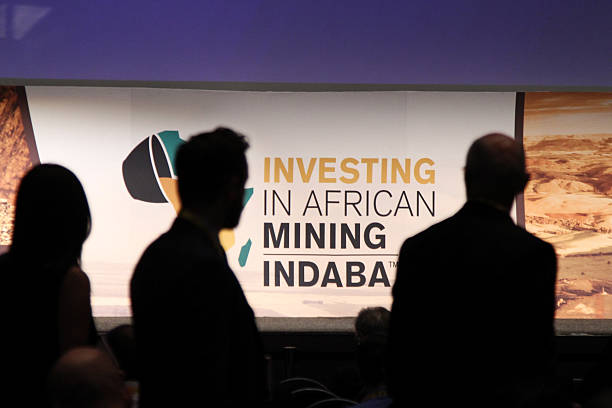
The Day 2 main-stage session brought together prominent mining and geopolitical thinkers in a novel debate format. Two teams of industry leaders presented opposing views on whether Africa stands to win or lose in the current geopolitical climate. Subject to a “politician’s rule” that neither side necessarily believed the arguments they were making, the discussion was light-hearted in tone but serious in substance.
Despite the humour, a clear theme emerged. Africa is exceptionally well positioned in the new resource era, thanks to its rich critical mineral endowment. The real question is whether the continent can translate geological advantage into long-term economic power through effective governance and regional integration.
Moderated by Rohitesh Dhawan, President and CEO of the International Council on Mining and Metals, the debate centred on a provocative question: “Is Africa a winner in the current geopolitical disruption?”
Power Politics and Vulnerability
Arguing from a sceptical perspective, Ronak Gopaldas, director at Signal Risk and visiting fellow at the London School of Economics, cautioned against over-optimism.

“Hope is not a strategy,” he quipped. “Africa has aspirations to be a winner, but in reality, the continent is more vulnerable than a certain CEO at a Coldplay concert!”
He suggested that the world is re-entering an era defined by power politics, where influence, economic leverage and military strength are increasingly decisive. Referencing the classic Eighties anthem, he noted that “Everybody wants to rule the world.”
“In that environment, we Africans will be rule takers rather than rule makers,” he argued. “We can’t just be ‘living on a prayer’. Without collective bargaining and regional solidarity, we’ll be going backwards.”
His remarks underscored concerns that without stronger political cohesion and strategic alignment, Africa could struggle to shape global mineral supply chains on its own terms.
Geological Strength and the Youth Dividend
Offering a more optimistic outlook, Mpumi Zikalala, CEO of Kumba Iron Ore, emphasised the undeniable weight of Africa’s natural resource base.
“Africa has an endowment that everybody wants a piece of,” she said. “We have around 40% of the world’s proven critical-mineral reserves in the ground beneath our feet. You can’t argue with that. The world is beating a path to our door, and we just need to negotiate deals that work for us.”
Beyond mineral wealth, Zikalala highlighted what she described as Africa’s “youth dividend.” With the youngest population in the world, the continent has a long-term demographic advantage. While skills gaps remain, she argued that training and development could equip young Africans to meet rising demand for critical minerals tied to the energy transition and advanced technologies.
“Our young people will allow us to unlock the possibilities for the future,” she said. “There will be long-term demand for critical minerals. And young people can be trained to deliver on that demand.”
The Crucial Role of Governance
Injecting a note of caution, Gracelin Baskaran, director of critical minerals security at the Center for Strategic and International Studies, stressed that geology and geopolitics alone are not enough.
“All three G’s have to be in place,” she said. “It’s not just about the geopolitical conditions, or the geological endowment. You need to get governance right.”
Baskaran pointed to declining exploration activity in certain African jurisdictions due to concerns about resource nationalism, double taxation and perceived instability. She also emphasised the need for deeper regional integration.
“Everyone talks about local beneficiation,” she said. “But not every country can build a refinery. It makes more sense to build one refinery to serve a broader region. Policy alignment makes that possible – and Africa needs to work on that.”
Her remarks reinforced a central takeaway from the debate: Africa’s opportunity lies not only in its mineral reserves, but in coordinated policy frameworks that can unlock regional value chains.
A New Cold War Focused on Minerals
TechMet chairman and CEO Brian Menell aligned with the optimistic camp, likening the current geopolitical landscape to a Cold War centred on resource control.
“The key front these days is the control of resources,” Menell said. “The world needs more of what we’ve got – for energy transition, robotics, drones, autonomous driving. It also needs a young and resilient population, and we will therefore be winners.”
He argued that global investors from the United States, Europe and Japan are already committing capital, supporting supply chain diversification and de-risking projects. In his view, these trends position Africa as an indispensable partner in the future global economy.
“Fundamentally, it’s about investment and returns,” he said. “The US, Europe, Japan and other investors have committed to providing capital, derisking investments and transforming global supply chains. Without a shadow of a doubt, that assures Africa’s position as a winner.”
Baskaran conceded the possibility, adding with a smile, “Africa can be a winner, so long as we build policy coherence.”
As the debate concluded, Dhawan captured the prevailing sentiment at Mining Indaba.
“We’ve spiced things up for entertainment value, but at the end of the day, even in times of geopolitical turmoil, there remain exciting opportunities for Africa,” he said.