

Mantshe unveils Coal Reimagined Programme as South Africa repositions coal for future industries
Minister highlights beneficiation critical minerals and clean coal technologies at coal conference
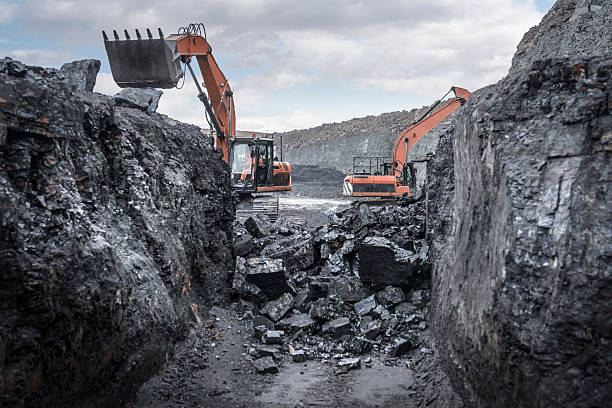
Mineral and Petroleum Resources Minister Gwede Mantashe have used his keynote address at the twenty-first annual Southern African Coal Conference, currently under way in Cape Town, to outline South Africa’s Coal Reimagined Programme, an initiative aimed at unlocking new value from the country’s coal resources.
The programme is being developed by Mintek, South Africa’s minerals beneficiation and technology research agency, and seeks to reposition coal beyond its traditional role in electricity generation.
“Coal contains a number of by-products that can be used in the economy,” he pointed out. “We’re reimagining coal, so that it can be used for other uses than electricity generation.”
Scientific research has shown that coal discards and coal fly ash contain valuable minerals such as rare earth minerals, alumina, gallium, silica, and vanadium. These materials are increasingly critical for modern applications including advanced manufacturing, batteries, electronics, and construction, with global demand accelerating rapidly.
South Africa’s coal sector produces more than 25-million tons of fly ash each year, yet less than 10% of this volume is currently beneficiated.
“Our coal endowment, therefore, presents South Africa with a unique opportunity to meet this demand using secondary resources that are already mined, processed, and stockpiled within our borders,” he highlighted. “Our response is clear: we must reposition coal as a critical mineral and a source of advanced materials, capable of supporting new industrial value chains.”
Mintek has spent decades characterising South Africa’s coal, discards, and fly ash, analysing their chemistry, mineralogy, environmental risk profiles, and behaviour during processing.
The Coal Reimagined Programme builds on this expertise, recognising that critical minerals in coal by-products are often embedded within complex alumina-, iron- and silica-rich matrices that require advanced characterisation, integrated extraction, and specialised processing technologies.
“Through this programme, we intend to transform a historical liability into an engine of economic opportunity, provided that appropriate investment is mobilised to enable progression from research and piloting to industrial deployment,” he affirmed.
“The programme is designed to position South Africa as a global leader in coal beneficiation, waste valorisation, and circular-economy innovation – converting legacy coal waste streams into drivers of economic growth, job creation, and environmental rehabilitation.”
Mantashe also highlighted the role of carbon capture, utilisation, storage, and use (CCUS) as a key technology for the future of the coal industry, noting that South Africa continues to invest in this area. He cited the CCUS project at Leandra in Mpumalanga as an example of how clean coal technologies could extend the life of the sector.
“Coal mining companies have a vested interest in CCUS,” he observed, adding that they should invest in it.
The coal sector currently employs about 90 000 people and remains a major source of export earnings for South Africa. Mantashe reiterated that coal remains a critical mineral for the country’s economy and energy transition.
“Coal is dynamic, coal is not static,” he asserted. “We never talk about moving from coal to renewables, but from high-carbon power to low-carbon power, which requires a variety of interventions.”
My brother suggested I might like this website. He was entirely right. This submit truly made my day. You cann’t believe simply how so much time I had spent for this information! Thank you!