

Dewatering trends shaping pump choices in African mines
How climate pressure and deeper operations are redefining mine water strategy
Water has always been part of mining. Today, however, it has become one of the industry’s most powerful operational disruptors.
Across Africa, mines are going deeper, rainfall patterns are becoming more erratic, and storm events are growing shorter but far more intense. The result is that dewatering is no longer a background maintenance task. It is now a frontline strategic discipline that directly affects safety, uptime and profitability.
Against this backdrop, the choice between diesel driven auto priming pumps and electric submersible pumps has taken on new importance. What was once a simple equipment decision is now shaped by risk exposure, energy efficiency, mobility requirements and total cost of ownership, both above and below ground.
Surface mines when speed power and mobility matter most
On surface operations, the impact of climate variability is immediate and unforgiving. Sudden cloudbursts can overwhelm pits, flood haul roads and destabilise pit floors within hours. When pit lake levels rise unexpectedly, response time becomes critical.
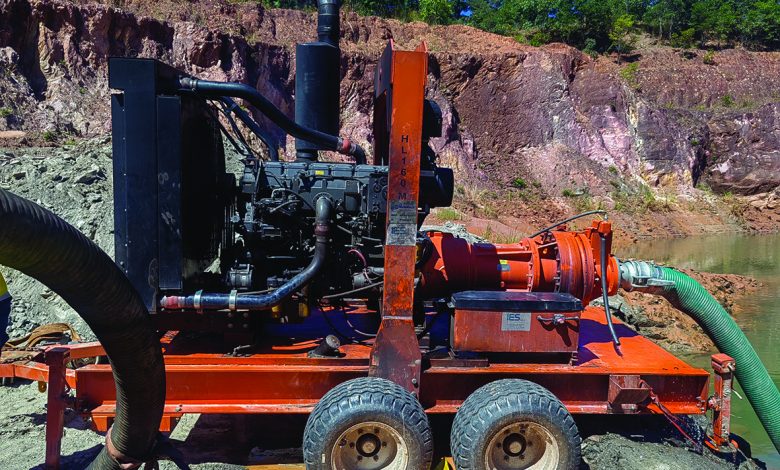
This is where high capacity diesel driven pumps continue to dominate. Trailer mounted or skid mounted units can be deployed rapidly without relying on fixed electrical infrastructure. This is a crucial advantage during storm events. Auto priming capability allows these pumps to cope with fluctuating inflows without delays, making them indispensable for unpredictable surface conditions.
Mobility further strengthens their appeal. As pits expand and inflow points migrate, production teams need dewatering equipment that can follow the work. Diesel driven solutions with integrated fuel tanks and controls reduce setup time and manpower requirements, enabling smaller teams to respond effectively. Pontoon mounted pumps add another layer of protection by maintaining reliable suction despite changing water levels, reducing cavitation risk and preserving pump performance.
Surface water also brings abrasive fines and silt, placing heavy demands on equipment. Pumps built with robust wear resistant components are no longer optional. They are a critical investment in uptime and longevity.
Underground operations efficiency and reliability below the surface
Underground mines face a very different set of challenges. Longer declines, wetter stopes and tighter control over electricity usage are driving demand for efficient continuous duty submersible pumps.
Electric submersibles, when correctly sized to their duty, deliver significant energy savings, particularly when paired with automated level controls and intelligent start and stop systems that prevent unnecessary run hours. Their compact design makes them ideal for confined underground environments, eliminating suction lines and reducing trip hazards while simplifying installation.
Water underground is often dirty, abrasive or chemically aggressive. As a result, pump design must go beyond basic performance. Advanced sealing systems, effective cooling, corrosion resistant materials, leakage sensors and heavy-duty cabling are essential to withstand harsh conditions and reduce the need for frequent retrievals and maintenance.
Application not preference drives the decision
There is no universal solution. Diesel driven auto priming pumps remain the preferred choice for emergency bypasses, stormwater management and pit lake dewatering where mobility and independence from the grid are critical. Submersible pumps excel in fixed installations and routine underground applications where reliable power is available and efficiency is paramount.
Total cost of ownership plays a decisive role. Diesel units incur fuel and engine servicing costs but avoid the need for electrical infrastructure. Submersibles generally offer lower energy consumption and fewer moving parts, provided they are protected, monitored and specified correctly.
Jordan Marsh, Managing Director of Integrated Pump Technology, stresses the importance of elevating dewatering from an afterthought to a strategic focus.
“The best dewatering outcomes come from pairing proven technology with a clear understanding of each mine’s hydraulic realities,” he explains. “That is why we supply world class brands with long African track records – Grindex for electric submersibles and Godwin for diesel-driven auto-priming units – and the local application know-how to specify them correctly for reliable long-term performance supported by localised support across the region.”
Why specification and support make or break performance
The cost of getting dewatering wrong is high. Undersized pumps can lead to flooding and lost production, while oversized pumps waste energy and accelerate wear. In remote mining locations, delays in spares or technical support can quickly escalate into serious operational risk.
Marsh highlights why trusted supplier relationships are critical.
“Mines need pumps that start every time, run to duty and keep running. Grindex submersible pumps and Godwin diesel-driven units have earned their reputations in Africa for exactly that – reliability in tough conditions. Our job is to combine these technologies with rapid support, correctly specified accessories and a spares pipeline that keeps risk low and output high.”
Integrated Pump Technology’s approach goes beyond supplying pumps. Complete solutions include correctly matched pipework, valves and strainers, alongside flexible service models.
Rental options are often ideal for seasonal rainfall peaks or emergency response, while ownership makes sense for long term predictable duties. Increasingly, digital controls, monitoring and telemetry are being integrated to provide real time performance insight, allowing issues to be addressed before they become failures.
Dewatering as a strategic advantage
As African mining contends with deeper operations, rising energy costs and growing climate uncertainty, dewatering is undergoing a fundamental shift. Pump selection is no longer about convenience. It is about engineering precision, risk management and operational resilience.
“By working with a reputable established company like Integrated Pump Technology – offering proven global brands such as Grindex and Godwin, backed by local expertise – mines can ensure they have reliable efficient dewatering solutions that safeguard production and protect profitability,” Marsh concludes.


This web site can be a stroll-by means of for all of the data you needed about this and didn’t know who to ask. Glimpse right here, and you’ll positively discover it.