
Weathering the impact why climate change remains a major risk to African mining
Climate volatility is reshaping mining operations across Africa, forcing the sector to rethink resilience, water security, and long term sustainability.
Climate change and the new reality for African mining
Climate change is no longer a distant threat. It is a present-day disruptor reshaping industries, economies, and ecosystems across the globe.
In Africa, few sectors are as exposed or as vital as mining. Intensifying droughts, erratic rainfall, and rising temperatures are placing growing pressure on water availability and operational stability. For mining companies, the compounded risks of environmental volatility and resource scarcity demand urgent and sustained attention.
“Climate variability has shifted from rare disruptions to an operating baseline, reshaping how the mining sector plans and protects its people. Weather extremes are no longer outliers but a reality that must be engineered into every decision to ensure operational stability and long-term value,” says Kierra Chetty, Principal Consultant, Climate Change, WSP in Africa.
For many African countries, mining is not just another industry. It is an economic backbone. In South Africa, for example, mining contributes approximately 6 percent to the national Gross Domestic Product. Any disruption to operations can reverberate across the economy, affecting employment, exports, and fiscal revenue.
The early onset of the Covid 19 pandemic demonstrated how operational interruptions can trigger widespread economic consequences, with recovery often proving slow and complex. These experiences underscore mining’s critical role in national resilience.
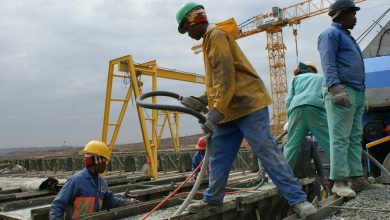
Unlike sudden shocks, the risks posed by climate change are largely predictable. However, they are intensifying in both frequency and severity. According to the Lloyd’s Register Foundation Global Safety Evidence Centre, mining workers are increasingly on the front lines of this growing threat, facing extreme weather events and rising temperatures that compromise both safety and productivity.
The Foundation’s World Risk Poll reveals that one in five workers worldwide faced harm at work in the past two years, with that figure rising to 21 percent in the mining and quarrying sector.
Workplace health and safety challenges are further compounded in water scarce countries such as South Africa, where the ongoing water crisis adds another layer of complexity to mine sustainability and operational resilience.
“One of the most significant and complex climate driven challenges facing mining operations across Africa is the need to manage water effectively. Water risk in mining is no longer just about scarcity, it’s about volatility. Sudden stormwater surges, prolonged dry spells, and shifting water quality demands require adaptive systems that can capture, store, treat, and reuse water efficiently and safely,” says Chetty.

During extended drought periods, mines often struggle to secure the water required for essential functions such as mineral processing, dust suppression, and equipment cooling. This challenge is particularly acute in arid regions where water scarcity is already a pressing concern.
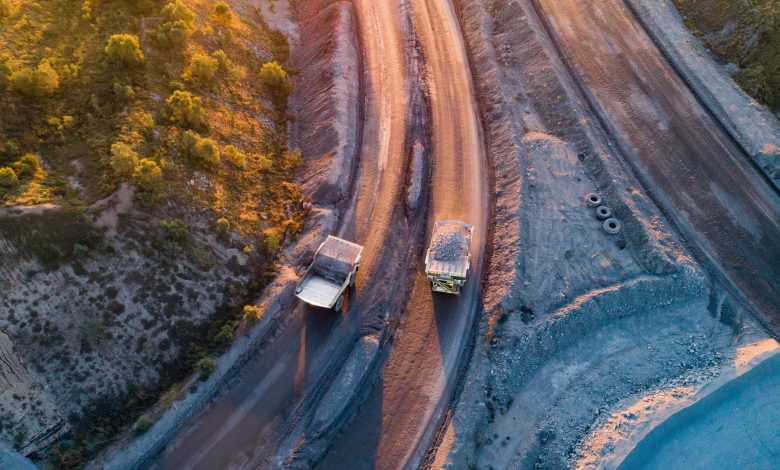
“In a country as water stressed as South Africa, long term performance relies on circularity such as protecting catchments, designing for reuse, and treating water as a shared resource to sustain both operations and communities,” says Chetty. “Additional rainfall would not resolve mining’s water challenges. When high intensity or out of season storms do occur, they frequently overwhelm mine infrastructure, flooding pits, tunnels, haul routes, and waste areas, disrupting operations and introducing substantial safety hazards.”
Managing excess water requires careful judgement. Mining companies must decide not only how to remove it, but where and how to discharge it without breaching environmental regulations or causing downstream harm. Failure to manage this balance can result in contamination, legal consequences, and reputational damage.
These risks are often compounded by outdated or insufficient infrastructure. Many mining facilities were built at a time when climate volatility was not considered a core design factor. As a result, they are increasingly ill equipped to withstand today’s extremes or comply with evolving regulatory expectations.
“This means that infrastructure was not designed for extreme events or even for the current design requirements being stipulated by global standards. Regulatory requirements have also improved over the decades and design criteria for climate impact has must be revised from original design requirements,” explains Nirvishee Juggath, Director Water Management, WSP in Africa.
“Whether it is underground, open cast or open pit mining, the act of mining has an impact on water resources and water quality, while inflow from rain, runoff, recharge and lateral groundwater ingress is inevitable,” adds Juggath.
To remain resilient, mining companies must strike a careful balance. This includes adopting innovations that improve water efficiency while developing strategies to capture and store excess water during wet seasons for use during dry periods.
“During high rainfall events water availability is not an aspect of concern for communities and industries, but during the dry season that’s when water quantity and quality become an issue,” says Juggath. “Irresponsible use and management of water do not help the situation.”
In many African countries, the relatively low cost of water, particularly where pricing models fail to reflect scarcity or environmental stress, can reduce the financial incentive for mining companies to invest in advanced water management solutions.
Juggath notes that this mindset is beginning to shift. “As mines are at the forefront of the risks climate change poses, with the inevitable impact on infrastructure and productivity, industries want to better understand how good water management can prevent loss and there are mitigation measures they can take.”
He encourages mining companies to reassess their risk profiles, operational plans, and environmental commitments. This includes reviewing infrastructure against best practice design standards and conducting design reviews, reliability assessments, and risk analyses.
“Mining companies should develop a risk-based action plan that identifies vulnerabilities and prioritises upgrades, particularly for critical systems and facilities.”
“We are seeing a clear shift across the sector toward resilience focused innovation and adaptive measures, where renewable and hybrid power systems, advanced process optimisation, real time monitoring, and closed loop water solutions are being integrated to reduce dependence on vulnerable resources, strengthen operational continuity, and enhance overall efficiency under increasing climate pressures,” says Chetty.
Infrastructure upgrades are also gaining momentum, with greater emphasis on building resilience into tailings storage facilities, haul roads, and processing plants.
“The frequency and severity of climate related extremes are increasing, but so is our capacity to engineer resilience. By integrating science based insights, strengthening critical infrastructure, and optimising water and energy systems, mining operations can safeguard performance, protect communities, and reduce vulnerability while adapting effectively in an increasingly volatile climate landscape,” concludes Chetty.