
Voices from the ground shape Africa’s mining future
Artisanal miners and regional mining leaders show why local value chains, inclusion and partnerships are critical to delivering the Africa Mining Vision on the ground.
By Rejoice Ndlovu
As African countries assess their mining sectors under the Africa Mining Vision (AMV), a consistent message is emerging from both grassroots miners and organised industry: reform will only succeed if it delivers real benefits to people on the ground.
During recent multi-stakeholder workshops reviewing South Africa’s mining sector, contributions from artisanal miners and regional mining leaders highlighted the urgent need to move beyond extraction towards inclusive growth and sustainable development.
Artisanal miners demand inclusion, not symbolism

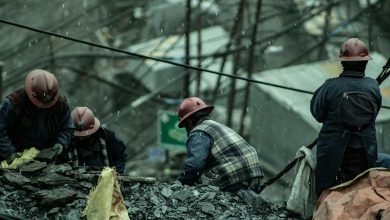
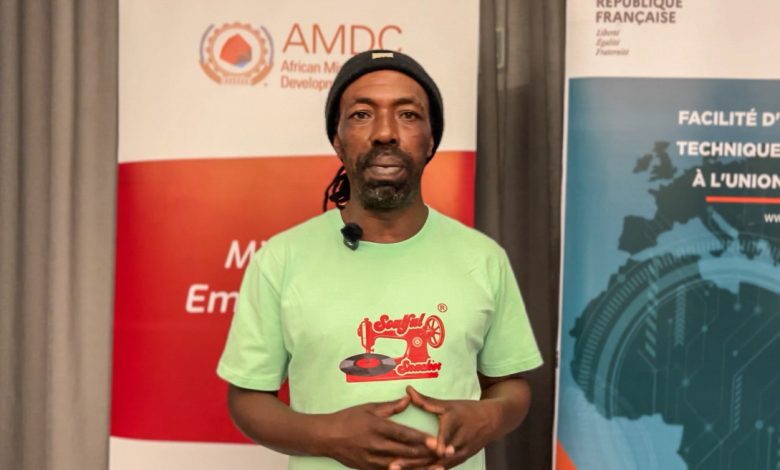
For Philan Mngomezulu, a representative of the National Association of Artisanal Miners (NAAM), and provincial coordinator within the MLO Community of Artisanal Miners, the workshops represented a meaningful shift in how mining conversations are being held.
“I’m over the moon. It’s quite exciting,” Mngomezulu said, describing the three-day engagement. “It’s a space where communities, in particular artisanal miners, academia and institutions like the African Minerals Development Centre come together and engage.”
He said the presence of diverse stakeholders signalled progress for a sector often discussed without those working at the coalface.
“If you look at the stakeholders that are present, from geoscience institutions to regulators and other partners, this becomes a catalyst for what we are doing on the ground,” he noted.
Mngomezulu believes the assessment process goes beyond South Africa and has implications for the continent’s broader mining future.
“It’s going to pave a way forward, not just for South Africa, but for the entire continent, in terms of how we shape the mining sector and how it benefits people socially, environmentally and economically,” he said.
With growing numbers of people relying on artisanal and small-scale mining for livelihoods, he stressed that better coordination, enforcement and policy alignment are essential.
“This is one of the projects that aligns with our artisanal and small-scale mining policy in Africa in general. It makes sense that we are brought together to see how we can move forward collectively,” Mngomezulu added.
Value chains are critical, but cannot be built by mining alone
From a regional industry perspective, Vusi Mabena, Executive Secretary of the Mining Industry Association of Southern Africa and the Association of Chambers of Mines representing 11 countries, highlighted local value addition as one of Africa’s biggest missed opportunities.
“Value chains are critical because they create jobs and expand economies,” Mabena said. “But we need proper legislation at country level to ensure that value chain programmes benefit beyond mining itself.”
He cautioned against the assumption that mining companies can single-handedly drive beneficiation and industrialisation.
“One of the challenges we face is expecting mining companies, whose core function is mineral extraction, to also drive value chains, without creating alternative manufacturing industries to support that process,” Mabena explained.
While the mining sector is willing to play its part, he argued that success depends on broader partnerships.
“As the mining sector, we are happy to support value addition by making our minerals available,” he said. “But we need partnerships to ensure the right people come on board so that value chains can succeed.”
Mabena pointed to Africa’s continued reliance on exporting raw materials as a sign of structural weakness rather than lack of potential.
“Africa is still extracting and exporting raw minerals,” he said. “What we need is a proper strategy on how to develop value chains and local value addition in the mining sector.”
Bridging policy ambition and operational reality
Taken together, the perspectives from artisanal miners and organised industry reveal a shared concern: strong policy frameworks mean little without practical implementation.
For artisanal miners, inclusion, recognition and coordination are key to turning mining into a sustainable livelihood. For industry leaders, certainty, partnerships and industrial strategy are essential for long-term investment and transformation.
As South Africa validates the findings of its Africa Mining Vision assessment, these voices highlight why the success of reform will ultimately be measured not in reports, but in jobs created, communities sustained and value retained on the continent.