
Research and innovation propel Wits mining school toward top 10 status
Doubling research output and industry-focused innovation pushes Wits into the global spotlight

The University of the Witwatersrand’s School of Mining Engineering is making waves globally, climbing to 11th in the QS World University Rankings for Mineral and Mining Engineering, the highest ranking ever achieved by a mining school in Africa.
This achievement is the result of a sharp focus on high-impact research, industry collaboration, and cutting-edge mining education.
Doubling its research output over the past two years has been a game-changer. “Our rising research output is fundamental to maintaining and improving our global ranking,” says Head of School Dr Paseka Leeuw.
“World-class mining schools distinguish themselves through the relevance, impact and visibility of their research.”
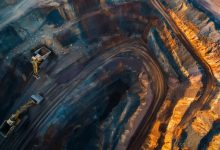
Wits academics are producing work that speaks directly to industry needs, tackling areas such as mineral resource governance, mine optimisation, digital mining, and rock engineering. The school’s strong academic programme and an expanding cadre of doctoral-level staff, combined with a curriculum aligned to Mining 4.0 and 5.0 principles, have also contributed to this achievement.
One of the major developments during the review period has been the strengthening of the school’s signature research clusters. While the Mineral Resources Governance Research Group entered its fourth year of operation, the Mine Planning and Optimisation Research Group achieved official recognition by the University Research and Innovation Committee.
“These groups are designed to promote interdisciplinary collaboration and deepen engagement with mining companies, research institutions and regulators,” says Dr Leeuw.
“Their research themes resonate strongly with the mining sector’s priorities, from responsible resource governance and ESG compliance to digital-driven productivity improvements.”
Partnerships with mining companies such as Sibanye-Stillwater and African Rainbow Minerals reinforce the relevance of the school’s research to real operational challenges in the sector.
“Our partnerships ensure that our postgraduate students and academics work on real problems with real impact,” Dr Leeuw explains. “When students’ research feeds directly into solving industry challenges, everybody benefits – mines themselves, students and the broader academic community.”
Reflecting the high standard of research expertise, five staff members maintained their NRF researcher status throughout 2023 and 2024, and multiple MSc and PhD candidates graduated during the review cycle.
“Our strategy has been to strengthen our staff profile by attracting and developing scholars who have both industry experience and research depth,” says Dr Leeuw. “In 2023 and 2024, we welcomed new PhD-qualified academics and supported several staff members in completing their doctorates; this investment is directly linked to the increase in our research output.”
Looking ahead, Dr Leeuw expressed confidence that the Wits School of Mining Engineering is on track to break into the global Top 10 in the QS ranking.
“We have the research momentum, the academic depth, the industry partnerships and the digital infrastructure to get there,” he said. “Our next focus is to expand our international research collaborations, increase postgraduate enrolment and continue building capacity among early-career academics. If we maintain this trajectory, breaking into the Top 10 is certainly achievable.”