
A necessity, not an option
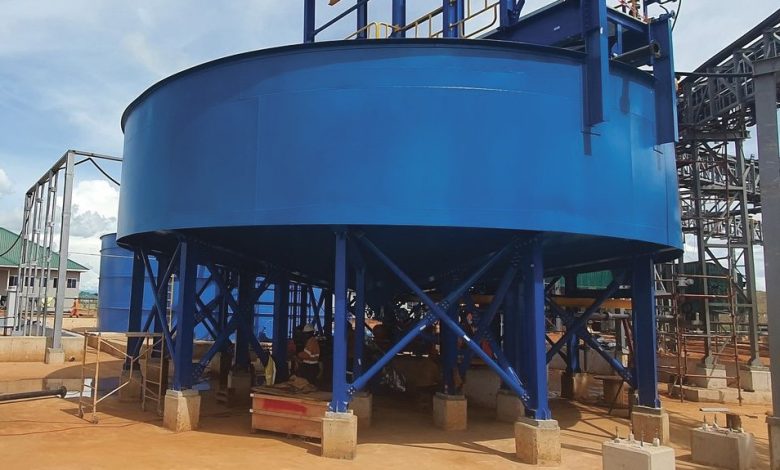
Ore sorting and water management are some areas in mineral recovery that have leveraged on the convenience of AI.
By Jimmy Swira
The use of artificial intelligence in African mining is not the future, it is the present. One of the areas where this is prevalent is in mineral recovery in underground mining projects.
Of course, as with any other revolution, there are always the conservative lot who ignore reality and stick to the familiar line: “This way has worked for decades, why the change?”

However, for one thing: AI is reshaping how mineral processing is done, and we are yet to witness more.
No Better Timing
At a time when there are changes in the mining space with huge implications on operations in the long term, there is no better timing in the emergence of AI, considering the current burdens.
Current Burdens
Indeed, AI has introduced much-needed efficiency at a time when the mining sector is facing challenges, not least the following:
i. Depletion of High-Grade Ore
In the context of South Africa, at shallow levels there is depletion of high-grade ore, especially in the gold and platinum group metals (PGMs) mining sectors. This has prompted mining companies in this area to take underground projects deep, in some cases even ultra-deep. And at those levels, the cost of mining does not come any cheap. It becomes a drag and drain on resources, not least the cost of energy, which is one of the biggest factors in mining.
This calls for investment in alternative mineral recovery methods that can enable them offset the financial burden of venturing deep level.
ii. The High Cost of Compliance
Compliance, for all its benefits, can be – in fact it is – viewed as a grudge obligation. While mining companies are sold on its significance to their operations, unavoidably, it takes a lot of resources to achieve. This is especially in an area of ESG reporting compliance, which entail investment in sound environmental practices, being seen to be a good corporate citizen, and devotion to tenets of good governance.
In the previous edition of Mining Business Africa, Jameel Essop, a specialist in end-to-end sustainability and Partner at PricewaterhouseCoopers South Africa (PwC SA), mentioned that, while ESG reporting compliance is a business mandate, he acknowledged that achieving it needs a lot of investment. He also advised mining companies to leverage on the convenience of AI and deep learning in sustainability initiatives.
Another persistent issue is the need for compliance with health and safety regulations, the Mine Health and Safety Act (MHSA) and Occupational Health and Safety Act (come to mind) with respect to South Africa.
iii. Inefficient Water Management
Typically, mining companies are located in water-scarce areas. Besides, drought conditions put a strain on already limited water sources. This renders prudent water management in a critical process like mineral recovery a necessity, not an option.
However, the challenge is that traditional water management methods are time-consuming and not always accurate. Even using smart meters alone does not guarantee efficient water usage.
For this reason, the adoption of AI can help mining companies ensure that water used in mineral recovery processes is managed sustainably.
Selected Applications in Mineral Processing
Recent advances, demonstrating the feasibility of AI in ore sorting and water management, are some of the ways that could help underground mining operations cope with the abovementioned challenges.
1. Advanced Ore Sorting
AI has not just changed the game in ore sorting, it is the game. One of the leading players in this field, TOMRA, has introduced CONTAIN™, an AI-powered software sorting platform. This enables mining companies to classify complex inclusion-type ores that traditional sorting methods miss, resulting in misclassification or excessive product loss. These are ores with complex mineralisation, such as tungsten, nickel, and tin.
By analysing X-Ray imagery in real time, CONTAIN™ identifies visual patterns in these rocks based on the probability of subsurface ore mineral inclusions. It gives operators precise control over sorting.
2. Water Management
To address this issue, TalboAnalytics, a Software as a Service (SaaS) platform, enables mines to ensure that every water drop in critical processes is make to good use as efficiently as possible. It integrates data from smart meters that monitor water volume, quality, and system performance.
Through machine learning (sensors, IoT, and AI), it identifies patterns, detects anomalies, and generates predictive insights for water systems in mining and industrial companies. This helps to manage and optimise water use and treatment processes.
Currently, mining companies are contending with increasing operational costs, ore depletion, and the heavy burden of compliance. Encouragingly, AI technologies are offering the hope of a viable solution, delivering measurable results in ore sorting and water optimisation.