
From risk to precision
Worldwide, traditional drilling and blasting methods are facing increasing scrutiny due to safety, environmental, and economic risks. In response, mines across the continent – particularly in South Africa – are embracing data-driven technologies, automation, and precision blasting techniques to good effect.
The saying: “Necessity is the mother of innovation” aptly illustrates the current trends in blasting and drilling projects in African mining. In the sector, increasingly, alternative techniques are being adopted to access and extract minerals, and are becoming mainstream. Nowhere is this better illustrated than in South Africa, based on recent developments.
The Necessity
Just like in other tasks from mine to mill, pit to port, there is increased obligation on mining companies to improve safety, enhance environmental compliance, and boost efficiency in their respective drilling and blasting projects. This has created a compelling business case for methods that can enable precision and efficiency.
So, what is wrong with the supposedly ‘tried and tested’ traditional techniques in drilling and blasting? One may ask: if it’s not broken, why fix it?

Doubtless, traditional techniques have been serving the purpose – and still do in operation in some projects – if not most cases. However, times have changed and the stakes are higher. The reality is that they fall short of meeting contemporary obligations.
Limitations of Traditional Techniques
Safety Concerns
The SAIMM has identified the following risks inherent in traditional blasting methods:
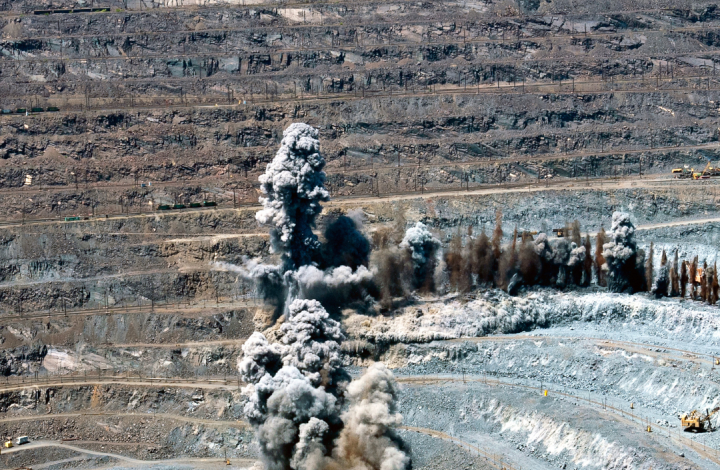
- Flyrock: These are rock fragments that can cause potentially severe injury and death.
- Misfires of explosives that fail to detonate at the correct time, only to explode later during subsequent activities, catching teams unawares.
- Toxic fumes, such as nitrogen oxides (NOx) and carbon monoxide (CO), produced during blasting, can cause asphyxiation and respiratory challenges, which can result in death.
- Ground vibrations can damage nearby buildings and critical infrastructure. In addition, frequent exposure to air blasts can cause hearing damage to blasting personnel.
- Inhaling respirable crystalline silica from dust generated by blasting increases the risk of lung diseases like silicosis. A case in point of the severity of the exposure is the plight of afflicted ex-mine workers in South Africa that has been widely reported.
- If misfiring is a problem, premature detonation is equally a risk. Its main causes are improper handling of explosives and faults in the detonation system, among others.
- Premature detonation can catch the blast personnel unawares—an explosion occurring before measures to secure the area are taken.
Environmental Risks
Besides safety risks, environmental risks increase the burden of compliance in traditional blasting. This factor has been highlighted in reports. The following are the most cited issues:
- The release of particulate matter into the atmosphere.
- Concerns from communities near mines about noise from explosions. In addition, conservationists highlight that it scares wildlife.
- Explosive chemicals can pollute waterways.
- Repeated blasting in some areas can cause rockfalls. Further increase in instability can cause land subsidence.
Economic Risks
Effects of traditional blasting can hit mining operations where it hurts the most: the bottom line. Specifically, this manifests in the following ways:
- The ensuing fragmentation can result in blockages and affect efficiency in loading, hauling, and crushing. Eventually, this can result in high energy consumption—energy constitutes the biggest part of operating expenses.
- The cost of accidents goes beyond fatalities: colossal cost in damages as a result of litigation from the affected parties and fines from regulators. What’s worse is the damage to reputation, which becomes difficult to address.
- The damage blasting causes to homes and infrastructure, and the health risks of fumes, can strain a mine’s relationship with the community.
- Explosives are one of the most critical blasting consumables that have to be used prudently. Yet, misfires can result in wastage. If one factors in several cases of misfires during blasting, the wasted explosives would be high.
The Innovations
Clearly, sustaining their operations while bearing the abovementioned risks is an enormous challenge. For this reason, mining companies have no other option but to take on board new innovations as a necessity.
True to form, in a report, the SAIMM has noticed new technologies in drilling and blasting increasingly being embraced in South African mining. Similarly, this is also happening in other African countries.
This indicates an industry committed to keeping abreast, thinking long-term in pursuit of precision and efficiency in drilling and blasting.
Drilling
In drilling, some of the techniques that have gained traction are longhole drilling and drop raising.
i. Longhole Drilling and Drop Raising
Extensively practised in South Africa, this method involves drilling long, large-diameter holes over the full length of an excavation, which are then charged and blasted from the bottom upwards.
ii. Automation and Robotics
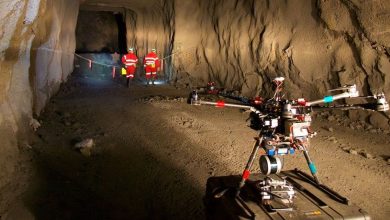
South African mines are integrating automated and robotic equipment in drilling and cutting — tasks that are labour-intensive. Hence, they are enhancing safety and efficiency by removing personnel from high-risk areas.
Employing GPS and advanced guidance systems, autonomous drilling rigs enable precise hole placement and optimise drilling patterns. In this way, human error is reduced significantly, increasing efficiency.
Blasting
In blasting, mining companies have taken aboard the following measures or practices:
a. Pre-splitting
In blasting, the common methods include pre-splitting, smooth blasting, and cushion blasting. In South African mining projects, pre-split blasting (pre-splitting) has been adopted as one of the ways of achieving efficiency and precision. The Southern African Institute of Mining and Metallurgy (SAIMM) explains how this is applied and its relevance: “This technique involves drilling a row of closely spaced, lightly charged holes along the perimeter of an excavation. Firing these holes creates a fracture curtain that limits shockwave propagation and control of the main blast, reducing flyrock and improving fragmentation.”
The other two methods are also at the disposal of mines in blasting projects.
Similar to pre-splitting, this method creates a smooth, finished wall with controlled detonation, reducing excavation needs.
Cushion Blasting is a technique that reduces the impact of ground vibrations on nearby structures, protecting them from blast damage.
In cushion blasting, precise hole placement and controlled detonations are used to minimise ground vibrations and overbreak. Through the use of precise hole placement and controlled detonations, ground vibrations and overbreak are reduced.
b. Data-Driven Decisions
What has become prominent is the use of real-time data. The integration of AI and data analytics with geological and operational data allows for more precise blast designs (in particular, square patterns, bottom holes first).
c. Electronic Detonation Systems
Hard to ignore is the dominance of electronic detonation systems.
Advanced initiation systems like BME’s AXXIS have become standard. By programming detonators within milliseconds, they allow for precise timing and sequencing of delays, which improves shockwave interaction between blast holes. Ultimately, this, together with data-driven optimised blast designs, enhances the interaction of shockwaves. This produces smaller, more uniform rock fragments.
d. Remote-Controlled Blasting
Remote-controlled blasting is being utilised as another alternative.
Typically, in remote-controlled blasting, sessions are managed from a safe distance using advanced control systems. Significantly, this minimises human exposure to hazards like fumes, noise, flying rock, and misfires.
Massive Gains
On the whole, the massive gains of these innovations are evident, particularly in the following areas:
i. Efficiency
There is improvement in blast outcomes like smaller, more uniform rock fragments. This increases throughput in downstream crushers (maximised mineral recovery) and reduces energy consumption.
ii. Enhanced Safety
Automation and robotics reduce direct human exposure to hazardous activities. This improves safety.
Another aspect – pre-split blasting – helps in controlling blast intensity. This prevents excessive ground vibration and the generation of flyrock and dust carrying carcinogenic particulate matter.
iii. Environmental
There is less vibration and damage to infrastructure, low fumes produced, and minimal disruption of wildlife in its natural habitat.