
African mines gearing up for green transition
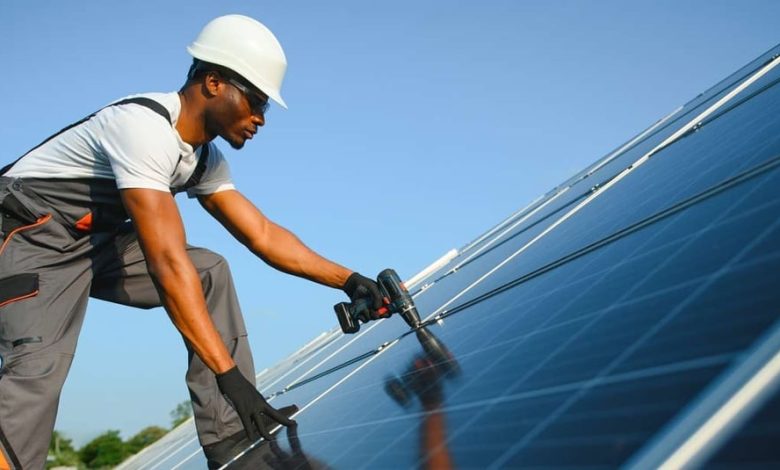
Mining companies are contributing to Africa’s transition to green energy by increasingly deploying wind, solar and hydropower to supply their considerable energy needs.
First Quantum Minerals seeks to reduce its carbon footprint by 30% through a $500 million investment in renewable energy to power its Kansanshi and Sentinel mines in Zambia. The project includes the establishment of a 230MW solar Photovoltaic (PV) plant and a 200MW wind farm with partners, Total Eren and Chariot.
In the DRC CMOC and green energy firm Lualaba Power have sped up development of the 200MW Nzilo II hydropower and floating solar project. This while the Angolan government, in partnership with Trafigura and engineering firm ProMarks, is developing a 2 000MW high-voltage electricity interconnector that will provide hydropower from northern Angola to mines in Zambia and DRC, as well as the Southern African Power Pool regional grid.
In South Africa Tronox Holdings will by 2027 have 70% of its energy needs met by NOA Group and SOLA Group. The mining and chemicals firm has secured over 400MW of renewable energy for its South African mining and smelting operations. The agreement between the three firms is set to deliver 497GWh of electricity annually.

Hybrid microgrids
The B2Gold Fekola Mine in West Mali has reduced its reliance on heavy fuel oil (HFO) by adding to its energy mix a combination of solar PV and battery storage. No fewer than 46 200 solar panels came online this year at the Fekola Solar Plant, increasing the total panel count to 142 912.
Considered to be one of the largest off-grid solar/HFO hybrid power plants in the world the expanded Fekola Solar Plant provides a total of 52 MW of power and 27.7 MWh battery capacity. Furthermore, it is expected to eventually supply approximately 30% of the mine’s total electricity demand.
Ken Jones, Director of Sustainability for B2Gold, commented, “The expansion of the Fekola Solar Plant is a significant initiative in support of B2Gold’s emission reduction target.
“The expanded facility will allow the Fekola site team to turn off the HFO plant for a portion of the day during times of sufficient solar radiation, a tremendous achievement for B2Gold and a testament to our commitment to implementing renewable energy solutions.”
Energy storage lagging
Karabo Mokgonyana, a renewable energy campaigner at Power Shift Africa, warns however that the storage of renewable energy is not keeping pace with generation capacity. She explains that the intermittent nature of renewable energy necessitates the use of battery energy storage systems (Bess).
“The global demand for batteries has surged in recent years and original equipment manufacturers are struggling to keep up with the needs.
“The bulk of the world’s battery storage technology is being produced in and sold to developed markets in the Global North and China,” she adds.
Ironically, the raw materials – lithium, cobalt and nickel – used to make these batteries are mined in Africa. Mokgonyana argues that it is imperative that Africa develops “its own storage infrastructure”.
“With abundant reserves of critical minerals, the continent has the potential to become a key player in the global battery storage market.
“African countries must, therefore, invest in local manufacturing capacity, including building factories for battery production and developing the expertise needed to maintain and repair storage systems,” Mokgonyana concludes.